
Temporarily Embarassed Trillionaires
All ceiling, no floor

California-born author John Steinbeck never wrote the line everyone hangs on him. The version that circulates — socialism never took root in America because the poor see themselves not as an exploited proletariat but as temporarily embarrassed millionaires — is a paraphrase that entered circulation decades after he died. What he actually wrote, in 1960, was smaller and better: "I guess the trouble was that we didn't have any self-admitted proletarians. Everyone was a temporarily embarrassed capitalist."
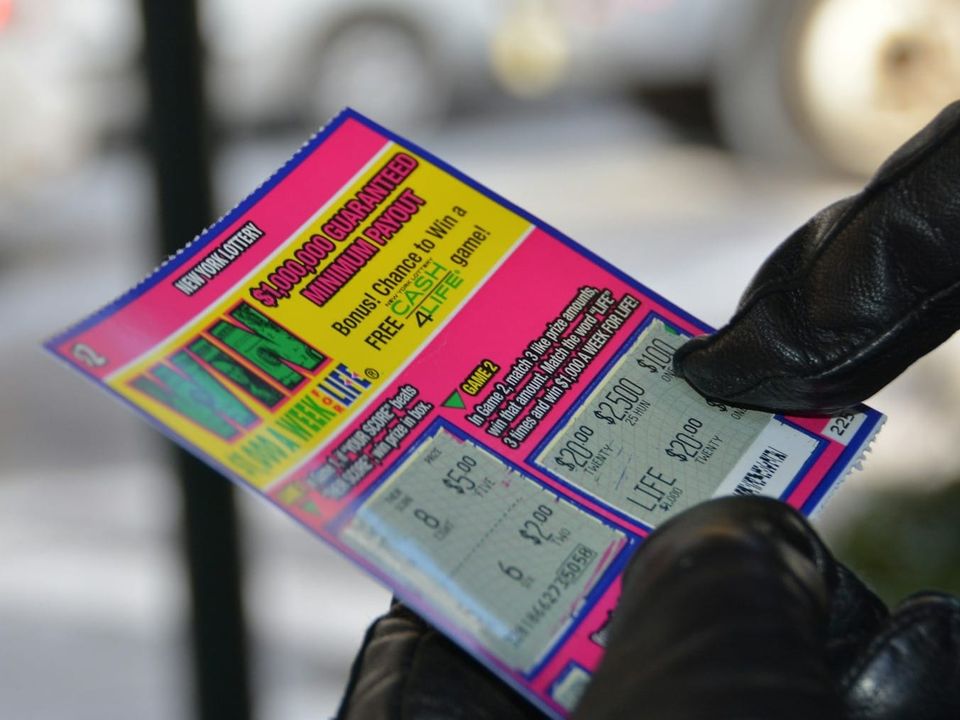
That the word "millionaire" got substituted in is telling. It's a status, not an ideology. Sixty years on from Steinbeck, the big update is another order of magnitude: temporarily embarrassed trillionaire. Like the lottery, the number keeps climbing because the exact number was never the point. The point was the promise, which begets the conviction that you, American, are not poor, just not there yet. One more ticket will do it. One more spin.
That belief is arguably the most powerful thing the country ever produced. A person who thinks they're almost there doesn't believe they need support, just a little more time. They don't organize, don't demand, don't begrudge the winner — "Hell, that's me up there! I'm next!" they think.
It turns out you can run a winner-take-all system indefinitely if the people you treat like suckers and losers otherwise are convinced they're winners in waiting. The belief does the work the state often does elsewhere. It's cheaper, and it asks nothing of the people at the top. With no state to put a floor under you, everything is a gamble. If you win, maybe you, too, can be a casino operator. Maybe even build a company town!
Now is the time of mobsters. The belief is wearing thin, and what shows through underneath isn't chaos, but the racket. The president's son inside the betting platform. Ethics laws are nowhere to be seen. And now, the largest stock offering in history engineered to push roughly a third of its shares onto retail buyers , with the public invited to purchase the top and call it access. You, too, can get rich or die trying.
In 1934, author (The Jungle, Oil!, etc.), journalist and socialist-activist Upton Sinclair won the Democratic primary for governor of California in a landslide, running on a program called End Poverty in California. Having seen the state and the country ravaged by the Depression, Sinclair proposed a safety net to get working people back on their feet: public works for the unemployed, pensions, and tax reform were among the pillars of his program. He looked headed for victory.
So the Golden State's powerful—MGM, the Hearst papers, and agricultural money—orchestrated the response. Studio head Louis B. Mayer docked his employees a day's pay for the opponent's campaign. Irving Thalberg, the boy wonder of the MGM, produced fake newsreels, hiring bit part actors to pose as ordinary citizens, dressed up to make Sinclair's supporters look like vagrants and foreigners looking to soak California's promised welfare state. Needless to say, these ran before MGM features in theatres. Early astroturf, if you will. The studios threatened to move the whole industry to Florida if Sinclair won (sound familiar?). He didn't. (This story is fictionalized, and a bit distorted, in what is otherwise my second-favorite Fincher film, Mank.) California didn't fail to build the alternative. The alternative was on the ballot, with a win within possibility, but pushback, laced with a bit of arm twisting and reality bending, won the day.
Which makes mid-century America, the one we pine for that made the middle class and our Boomer parents secure and wealthy, a more curious anomaly. The brief stretch when a ladder, in the form of the GI Bill, the cheap house, the union wage, the state college that cost little or nothing, was a historical bug, not a structural feature. Strip those conditions out and you're back to the baseline the country ran from the beginning: the long shot as the national instrument, the move to new territory where the old rules supposedly don't apply. I've written before about America's open invitation to quasi-religious (and actual religious) self-belief, which often went hand-in-hand with the land lotteries that distributed the frontier, helping to build not just the physical nation, but its psyche.
Which brings us to last Thursday. A company born in California* priced the biggest bet in market history. The offering crowned the first paper trillionaire and opened the doors so ordinary people could buy in through their phones via Robinhood, SoFi, etc. with the retail component several times the usual size. The public was invited to purchase the top as "democratized access". There is also an apparent army of people who bought private shares years ago, via private markets, who are only now finding out whether they own a piece of the future or a lump of spacedust. Anduril's cofounder Matt Grimm put it to Fortune without varnish: how many people think they bought into SpaceX, he asked, when they were really just funding some guy's coke habit in Miami? The number, he said, is not zero.
But were they deluded? They know it's a lottery. As Jack says to Shanna during the point-counterpoint-esque clip in the classic spoof Airplane! "They bought their tickets, they knew what they were getting into!" Some of the many real and fictional shareholders will remain temporarily embarrassed. Most will get, and probably take, another spin.
You gotta be in it to win it.
*Of course SpaceX isn't a California company anymore. In 2024 Musk moved its headquarters to a patch of South Texas scrub, using a litany of tax, regulatory and gender identity grievances as the reason, re-incorporated it there, and let his employees vote the place into a town called Starbase, with a SpaceX vice president for mayor.


Member discussion