Frozen Light
What The Golden Hour reveals about nostalgia and time

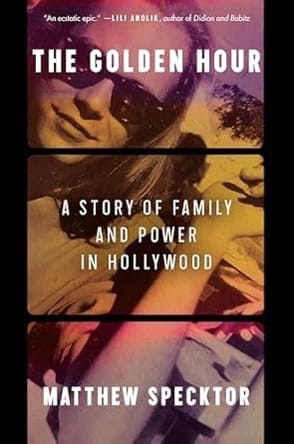
Storytelling about storytelling is hard, especially when it's a story within a story about the stories that surround us. Matthew Specktor's The Golden Hour: A Story of Family and Power in Hollywood, about to be released*, does this first masterfully, with a craft and care that comes not only from consuming, trading in and creating these stories, but also from being inside it well before his own story begins. Specktor's memoir is a kind of multigenerational mini-epic, and a documentary of an ever-sprawling industry all entwined. It's a story that balances dream-like qualities with stark realism, poetic language with an unflinching self-reflection.
The Golden Hour transports the reader from a cinema in mid-50s Los Angeles, where Specktor's father Fred has begun his search for purpose that will ultimately lead to him becoming a Hollywood super agent—through mail rooms, movies, marriages, mergers, gain and loss—to the son, standing at the edge of the now, but never fully touching it. Along the way, partners, professional and personal, parents (his mother was also a writer), siblings, and friends enter and leave the frame, families form and divide and form again. Movies go corporate, as does the entire Hollywood supply chain, and the resulting de-risking of storytelling has left us all with less than we might have hoped for creatively.
Told in an eternal present tense, Specktor foreshadows and calls back, giving the reader the feeling they stand in the narrative with him. Yet, unlike how he describes his father Fred: "He is not today, nor will he ever be, an introspective person. Which is not to say he lacks depth. Only that his mind rides the crest of its present moment like a surfer's, neither looking too far ahead nor sulking upon its history," Specktor's telling is shot through with introspection, an examination of the surrounding lives that fold back into his own story.
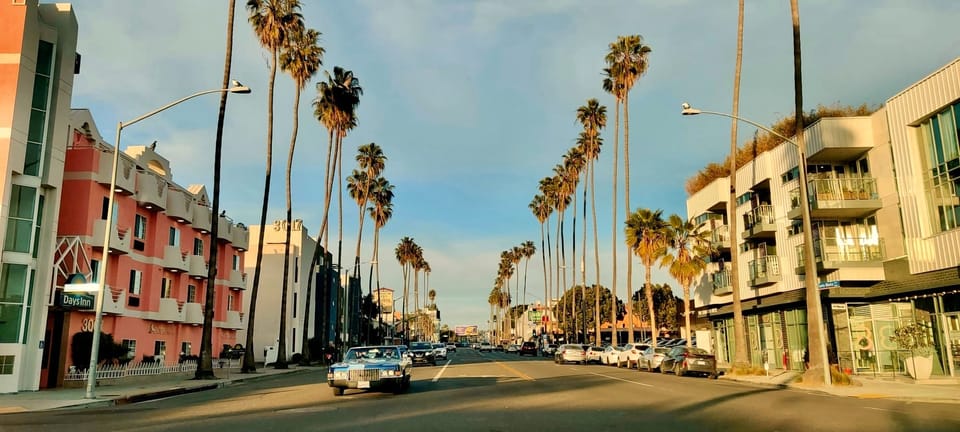
Using the tools of screenwriter, novelist, and observer, Specktor deftly carries us along, smoothly dollying the reader in and out of scenes. He builds the context of his world as it's unfolding—at the level of studios, egos and scripts, but also takes us on a walking tour through the intimate microcosm of Santa Monica and its surroundings, set almost as a tilt-shift miniature. Though it stretches to New England, New York and even Tokyo, at its heart, the memoir never really strays more than a few dozen blocks of real estate, a village amidst a factory town where we often forget people are born, grow up, sometimes grow old and die. Where many exist in an eternal present, whether culturally or in personal memory.
Full disclosure: Matthew and his wife Samantha are friends, a fact which usually dissuades me from reading a person's work (sorry, y'all, it's a tick). In this case, spending time with them allowed his voice to enrich how I heard the narrative—not in his actual voice, but his narrative voice, one honed through decades of being a writer and student of others' stories.
The Golden Hour walks the line between memoir and reportage with a deft touch. Being Hollywood, real figures in film, TV, politics and culture, wander through. There are, of course, Hoffmans, Brandos, Lynches and Sheens. Even Huey P. Newton figures in this story, as do Baldwin and Didion. These figures appear not as name-drops, however, but as essential players in the author's family story. They are the people who pass through hallways, join for smoke breaks, leave messages on the home answering machine, or wander over at a pool party in a place as small as this.
The Golden Hour lingers in the mind, or it has for me. In an industry built on artifice, Specktor delivers something rare—a Hollywood story stripped of gossip, gloss or manufactured grit that somehow reveals more truth about power, family and time than the tell-all version ever could. This book made me tear up in places, as I recognized the feelings of loss and missed opportunities, as well as the surprising consolations. This memoir isn't just for those fascinated by the machinery of entertainment, but for anyone who's tried to understand their own story while still living it.
*I read a preview copy, for which I am grateful.
Receive the latest updates and extra features in your inbox.




Member discussion