Bunker Mentality
Sven Holm's spare vision of privilege at the end times.

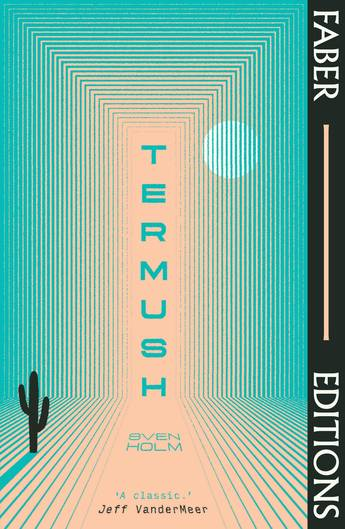
As alluded to here in prior posts, I've been reading my way through the cozy catastrophe canon in the last year or so, leading from the works of John Wyndham to John Christopher, toward harder stuff, like Ballard. My latest stop, at Termush, feels like a waypoint along this path.
I wasn't aware of Holm or this book until Amazon dropped it at my feet during a bulk purchase of Jeff VanderMeer's Southern Reach quadrilogy (VanderMeer writes the forward). The Faber edition was issued in 2023, 56 years after the debut of this novella. I'll leave you to look up Holm, but the reappearance of this not-so-cozy apocalypse story feels timely, for reasons I'll go into.
Briefly, Termush follows an unnamed narrator among wealthy guests at an exclusive coastal hotel somewhere on the Atlantic coast (Holm doesn't specify where) designed as a nuclear survival retreat available by advance registration. After a catastrophe ("nuclear" is also never said, as many reviewers have pointed out) devastates the outside world, the survivors emerge from underground shelters to maintain a facade of normalcy within the protected grounds of this hotel, set a safe distance from the destruction, death and fallout elsewhere.
The narrator, a former university professor, describes his days quietly moving around the resort, sometimes listening to centrally piped music in his room, sometimes sharing a bottle of wine with the largely silent Maria, presumably another guest he has connected with. The guests go through a cycle of dining, strolling, and generally just existing, as hotel management and an oversight committee barely keep up appearances. They take a boat trip for a change of scenery, and, it seems, for an unspoken reccy of areas nearby. Except for the allusions to damage and illness elsewhere, at first this seems to be a sterile place of reprieve, but little drama. There's just the odd dead bird and unhealthy dust on the fruit bowl to signal something's rotten in the resort.
That is, until the outside world slowly intrudes in the form of radiation-sick villagers, who arrive in drips and drabs seeking help. The residents also keep up with news of "reconnaissance men" sent out by resort management to scout the area. Naturally, when ill people show up in this quiet retreat, conflicts develop between guests and staff over how much assistance to provide. The hotel's doctor advocates for treating the sick, while management limits aid to preserve resources and prioritize the paying residents' comfort. More desperate, organized groups of survivors soon follow.
You would expect drama here, but the narrator coolly describes the rising tension in small vignettes that punctuate the boredom. I kept hearing a Chris Marker-style narration in my head, along with occasional pops in the recording. Termush is essentially a story realized in faded tones, more black and white than vivid color.
The narrator documents his growing unease with the moral choices being made—his and others—recalling increasingly uncomfortable dreams that show his own psychological shift as the reality of this guilty paradise becomes untenable. Written with stark, even dry minimalism, Termush is very much a work of its time, quietly intellectualizing the emerging reality of a world where even the middle class could buy separation from potential annihilation lurking in nuclear conflict, epidemics, or urban violence.
With billionaire bunkers occasionally making the news these days, Termush the resort feels quaint—more like your grandparents' golf resort in Palm Springs than a Soho House silo in Hawaii. The survival-as-a-service element is the part that hits, however. We have always used resources to gain safety and separation, nothing new in that. Holm anticipated the crudeness and amorality of how it would manifest in an increasingly commercialized world. Today, Termush would be a TikTok brand at worst, somewhere between Goop and boho house sharing.
Termush is a very fast read—almost a long-form Esquire article from the late 60s. There is, as I've said, little detail, and not much in the way of drama. Just the creeping quotidian dread that comes from buying a spot at the end of the world—somewhere to watch the credits roll slowly as you worry about that nasty cough and the rash you developed yesterday.
Receive the latest updates and extra features in your inbox.




Member discussion