
Jailbreaking the Future
They don't need rules where they're going


It took eleven days to re-insert Jensen Huang. If you've been under a rock and didn't hear the screaming from almost everyone outside of the AI ecosystem, Nvidia's board voted unanimously on Monday to restore him, with a Justice Department inquiry still "open", a Senate hearing still scheduled, and the President bragging on CNBC he'd recommended it.
The case for Huang's return wasn't that he'd done nothing wrong (few denied he had, as far as HR rules and corporate governance are concerned), but that he was, in the President's word, a genius, and in Elon Musk's telling one who couldn't be replaced.
The question I come back to is: why the hurry?
Over the past year I've written here about risk-maxxing, the stripping out of safety margins at every scale, from teen gamblers to retail traders to the biggest market listings in history. Most of this describes the method. It hasn't yet adequately described the goal. Why take these risks if you're at the top of the world already? In this case, "money" or "beating China" don't cover it. The Huang scandal concerns advanced chips allegedly reaching China, and the people involved are among the richest who have ever lived. In conventional terms, it would take a lifetime or more to spend what they've accumulated.
Recently, in an exchange with an author friend, I found the word I've been reaching for: jailbreak.
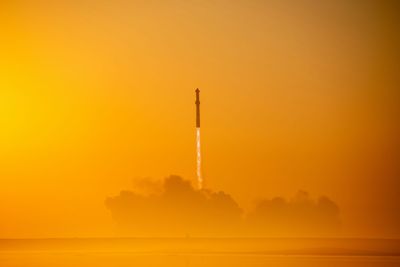
Look at what the main players here say they want. Elon Musk wants a city on Mars, and has described a planned SpaceX satellite constellation as "a first step towards becoming a Kardashev II-level civilization", which is to say one that captures and puts to work the energy of its local star, typically imagined as a Dyson sphere. Sam Altman has said we may be a couple of years from early versions of superintelligence. Curtis Yarvin, whom the Vice President has named as an influence, wants the republic run by a chief executive with a monarch's powers. The top guy runs things like a one-man state, with sweeping legal immunity.
These are different projects, and their backers often can't stand each other. What they share is a first step. Each moves the future off the ground where the rest of us have a say (elections, courts, regulators, disclosure rules, hearings) and onto ground where the deciding inputs are compute, capital, launch capacity and talent, which they already hold.
None of them has written this down, and I doubt they've agreed it among themselves. The stated goals differ, and the endgame underneath them is tacit. You see it in what happens when an obstacle appears: people who share no destination risk a lot to remove that obstacle.
That is the jailbreak: break civilization out of the arrangements that currently bind it, then be the party with the resources to run whatever comes next.*
A coup changes who holds power, whereas a jailbreak removes the limits on what power is allowed to do. Anyone who has unlocked a phone or tricked an AI model past its safety rails knows the move, and the companies involved here work hard to stop users doing it to their products, while attempting to skirt such controls from courts and regulators. The difference is in who gets to break out of the system. Here, it's the future that leaves, under the care of a select few, and the rest of us proles stay where we were.
One veiled statement of intent came three weeks ago, framed as it often is as a joke. Well, an Elon joke, which often contains a grain of his mindset underneath. Hours after the Republicans' midterm losses, Musk posted on X: "Data centers in space looking pretty appealing right now." (SpaceX has received permission to launch up to a million satellites as orbital data centers, with the FCC including the Kardashev goal in the news release—surely a first for the US government, or any government).
On the ground, the restrictions come off one at a time. Export controls on advanced chips were waived last year in return for 15% of the revenue. A board's judgment on its chief executive was reversed after a word from the President. A merger of Tesla and SpaceX, which would be the largest corporate tie-up ever, is headed for a review that asks about prices and competitors, but probably less about what happens when a company gets too large for a government to refuse.
The payoffs differ. The President's own accounts hold Nvidia and Tesla shares and SpaceX debt, so he owned a piece of the company whose board he says he reassured. Huang's company owns stakes in the labs it supplies, and wins whichever arrives first. Some want a new civilization, some want a cut, some would settle for a permanent standoff with China in which they are the indispensable suppliers.
Where this goes next depends on who runs out of road first. I read this month's midterms as voters saying they want the society they have repaired, soon, even moderately upgraded and authoritarian-proofed. Nothing suggested people were in the mood for accelerationism.
The protagonists in this piece are betting they can get far enough before that preference turns into guardrails and red lines, and a new Congress sits in January. Each move so far has needed a larger one to protect it. None of these moves has to be repeated to matter. As I argued in The Ratchet, once a limit gives way, a rule flexes, or a boundary is crossed, everyone who advises, invests or competes knows in the back of their mind how far the possibility space expanded, for better or worse.
The further out the risk-maxxers go, the more they have to stake on the next step, and the less any of it can be walked back. It's a game of chicken played with a civilization, and likely to produce outcomes that none of its protagonists, its enablers or the general public can anticipate right now.
*This is where I diverge from Naomi Klein and Astra Taylor, whose End Times Fascism looks at the same people and sees bunkers: a ruling class walling itself off from a future it has helped wreck, and sitting out the collapse in comfort. I don't think this cohort plan to sit anything out. They intend to be in charge of what comes next, or to see their children in charge of it. Fascism travels with that project where it's useful, but it's a passenger, and they aren't all headed to the same place.
Subscribe to receive by email, get occasional special posts, and more.



Member discussion